On this page:
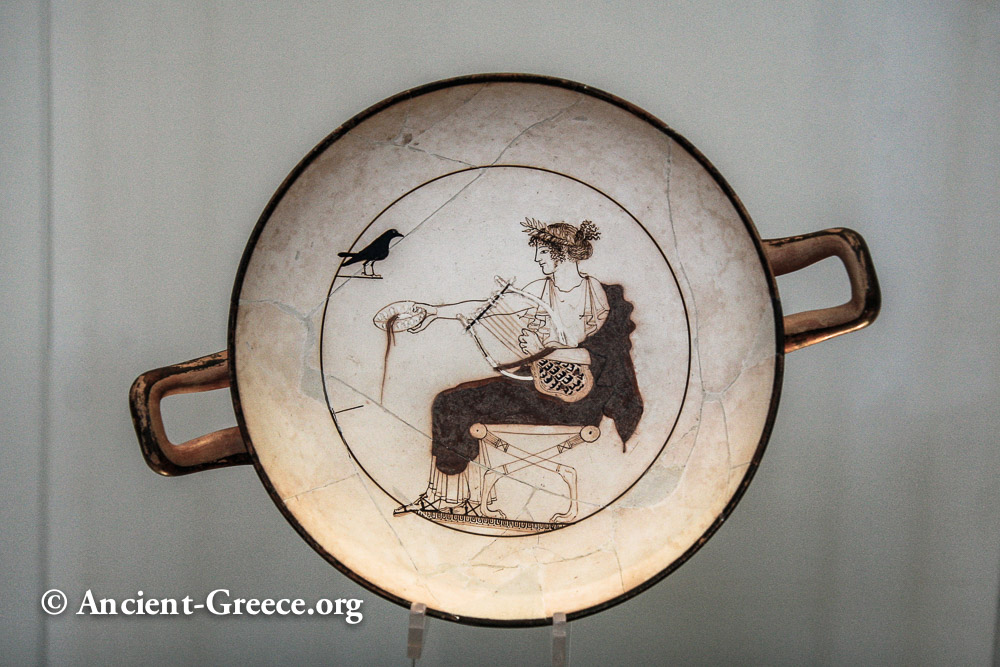
Apollo squinted in the bright sunlight and calmly tensed his muscles as he pulled his bow. He released his arrows one after the other until Python’s blood was spilled and his life escaped in the thin air. Python-dragon,the faithful guardian of Ge’s sacred ground, had guarded the hill for hundreds of years until his encounter with “far-reaching” Apollo.
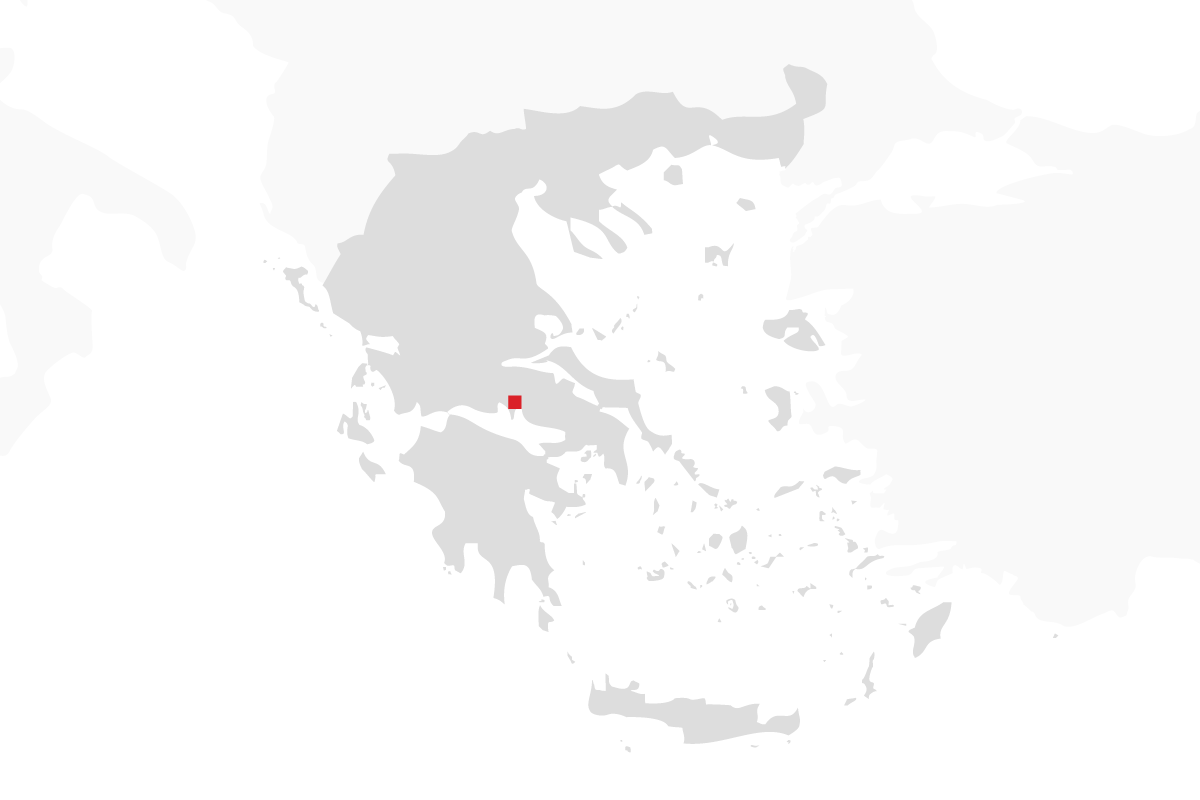
Delphi was inhabited since Mycenaean times (14th – 11th c. BCE) with evidence of early worship of a Mother Earth deity which was gradually and peacefully supplanted by the god Apollo in the early Iron Age.
From here the high road to Delphi becomes both steeper and more difficult for the walker. Many and different are the stories told about Delphi, and even more so about the oracle of Apollo. For they say that in the earliest times the oracular seat belonged to Earth, who appointed as prophetess at it Daphnis, one of the nymphs of the mountain.
There is extant among the Greeks an hexameter poem, the name of which is Eumolpia, and it is assigned to Musaeus, son of Antiophemus. In it the poet states that the oracle belonged to Poseidon and Earth in common; that Earth gave her oracles herself, but Poseidon used Pyrcon as his mouthpiece in giving responses. The verses are these:–
Forthwith the voice of the Earth-goddess uttered a wise word,
And with her Pyrcon, servant of the renowned Earth-shaker. [Musaeus], EumolpiaThey say that afterwards Earth gave her share to Themis, who gave it to Apollo as a gift. It is said that he gave to Poseidon Calaureia, that lies off Troezen, in exchange for his oracle.
Pausanias. 10.5.5
Apollo’s worship as the god of light, harmony, and order was established between the 11th and 9th centuries in the slopes of Mt. Parnassus at Delphi, and the new god’s values reflected the preoccupation ancient Greeks had with intellectual command over earthy (as in “beastly”) instincts.
Slowly over the next five centuries the sanctuary grew in size and importance and became the most famed Oracle of the Classical world.
Oracle at Delphi
I have heard too that shepherds feeding their flocks came upon the oracle, were inspired by the vapor, and prophesied as the mouthpiece of Apollo. The most prevalent view, however, is that Phemonoe was the first prophetess of the god, and first sang in hexameter verse. Boeo, a native woman who composed a hymn for the Delphians, said that the oracle was established for the god by comers from the Hyperboreans, Olen and others, and that he was the first to prophesy and the first to chant the hexameter oracles.
Pausanias. 10.5.7
During the 8th c. BCE Delphi became internationally known for the oracular powers of Pythia, the priestess who sat on a tripod, inhaled ethylene gasses, and muttered incomprehensible words that foretold the future.
They say that the seat of the oracle is a cave that is hollowed out deep down in the earth, with a rather narrow mouth, from which arises breath that inspires a divine frenzy; and that over the mouth is placed a high tripod, mounting which the Pythian priestess receives the breath and then utters oracles in both verse and prose, though the latter too are put into verse by poets who are in the service of the temple. They say that the first to become Pythian priestess was Phemonoê.
Strabo. Book IX, chapter 3
At first, oracles were issued once per year, on the 7th day of the month Bysios (February – March), on Apollo’s birthday, but as the sanctuary’s fame grew oracles were issued each month “apart from the three winter months when Apollo was absent while visiting the land of the Hyperboreians (Konsola, 21).
The ancient people of the Mediterranean had such faith in Pythia’s view of the future that no major decision was formed without consulting the Oracle of Delphi first. Greek and foreign dignitaries, heads of state, and common folk made the pilgrimage to the Delphi sanctuary, and paid great sums for Pythia’s oracles.
The levy (pelanos) and a favorable sacrifice of a black goat allowed them to receive their oracle. Since the sanctuary only served the public a few days over nine months out of the year, great sums were paid by the more affluent people in order to bypass the long line of pilgrims.
After falling into a trance, Pythia muttered words incomprehensible to mere mortals. The priests of the sanctuary then interpreted her oracles in a common language and delivered them to those who had requested them. Even so, the oracles were always open to interpretation and often signified dual and opposing meanings.
“῾’Ηξεις ἀφήξεις οὐκ ἐν πολέμῳ θνήξεις” (You will go you will return not in war you will perish) was an example of this duality of meaning. The above sentence can be interpreted two different ways depending where the comma can be placed. If a comma is placed after the word “not” the message is discouraging for him who is about to depart for war. If on the other hand the comma is placed before the word “not”, then the warrior is to return alive–(Ancient Greek inscriptions did not use spaces between words, so the comma analogy here is a device to visualize the shifting meaning of the sentence).
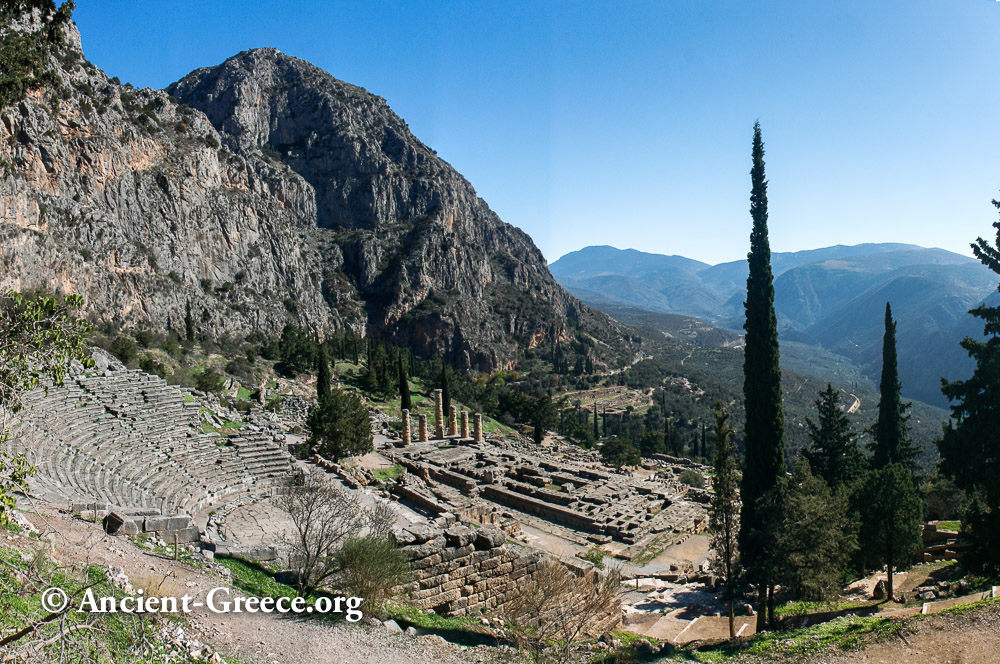
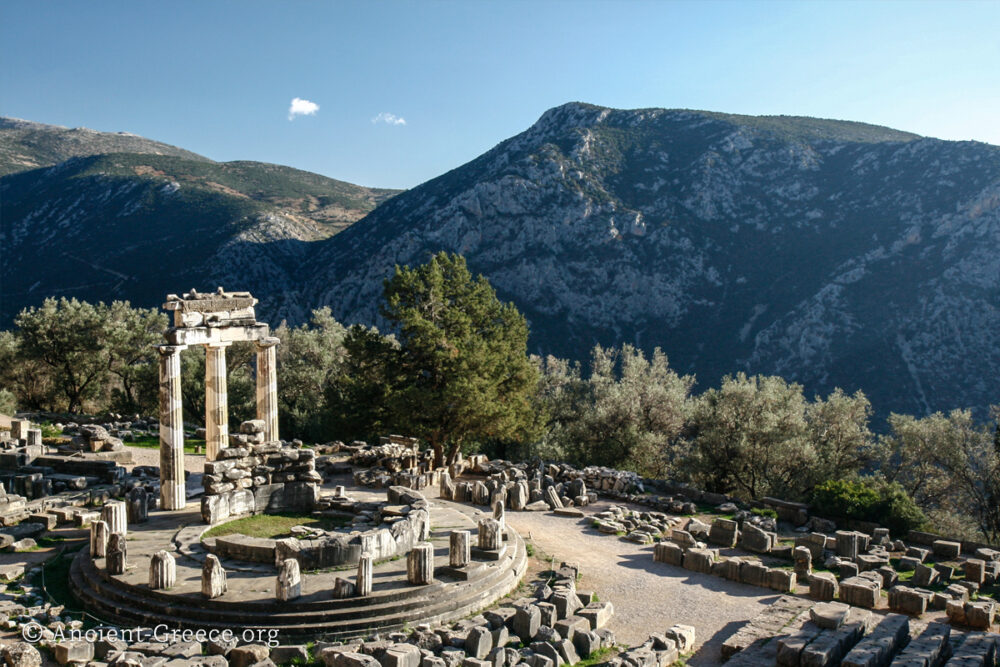
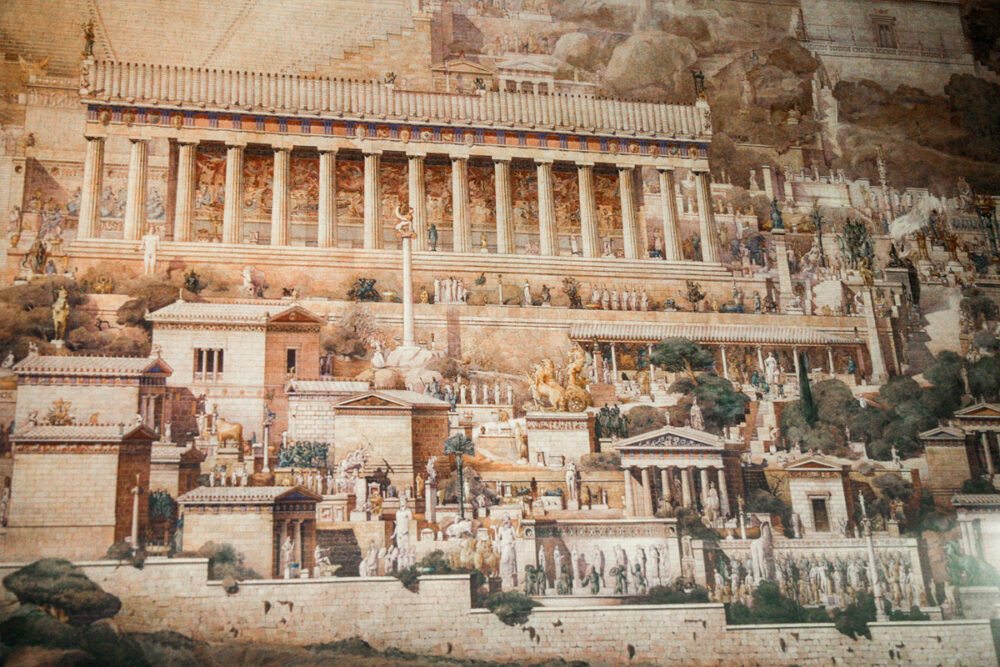
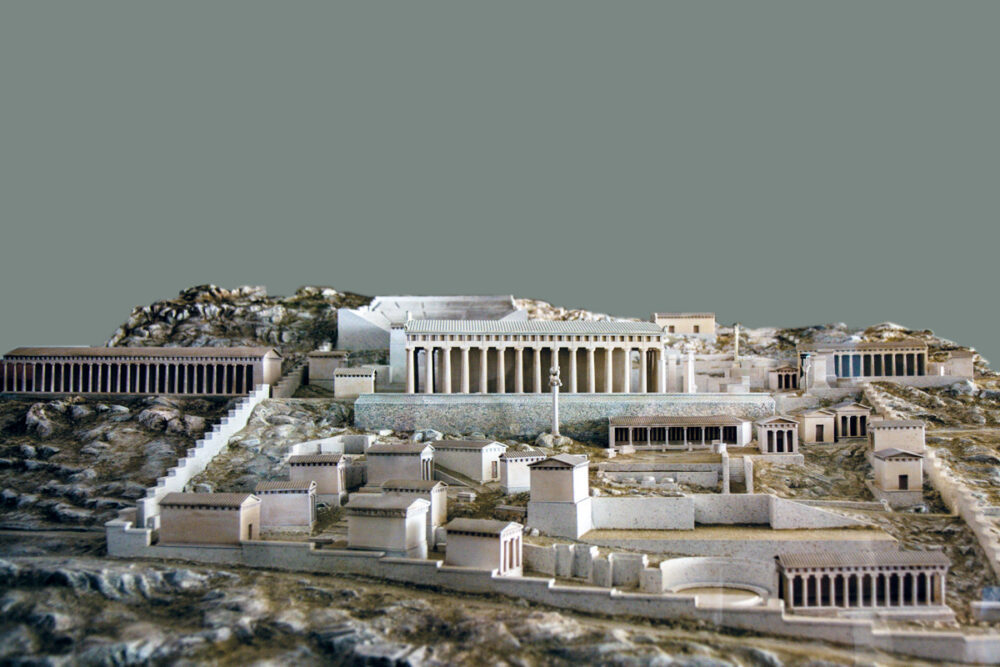
Delphi Sanctuary
Such was the importance of the Oracle at Delphi that the ancients believed it to be the center (“Omphalos”) of the world and even heads of state relied on its oracles for major decisions.
Famously, the oracle advised the great Persian Kings of the time, and when the Persians were poised to sack Athens, Themistokles turned the advice of the Oracle into a winning strategy that led to the Greeks’ victory in the naval battle of Salamina. The Oracle had simply advised that “wooden walls” would aid to victory, and Themistokles interpreted walls to mean the wooden ships of the Athenian fleet, thus convincing the Athenians to build the necessary triremes.
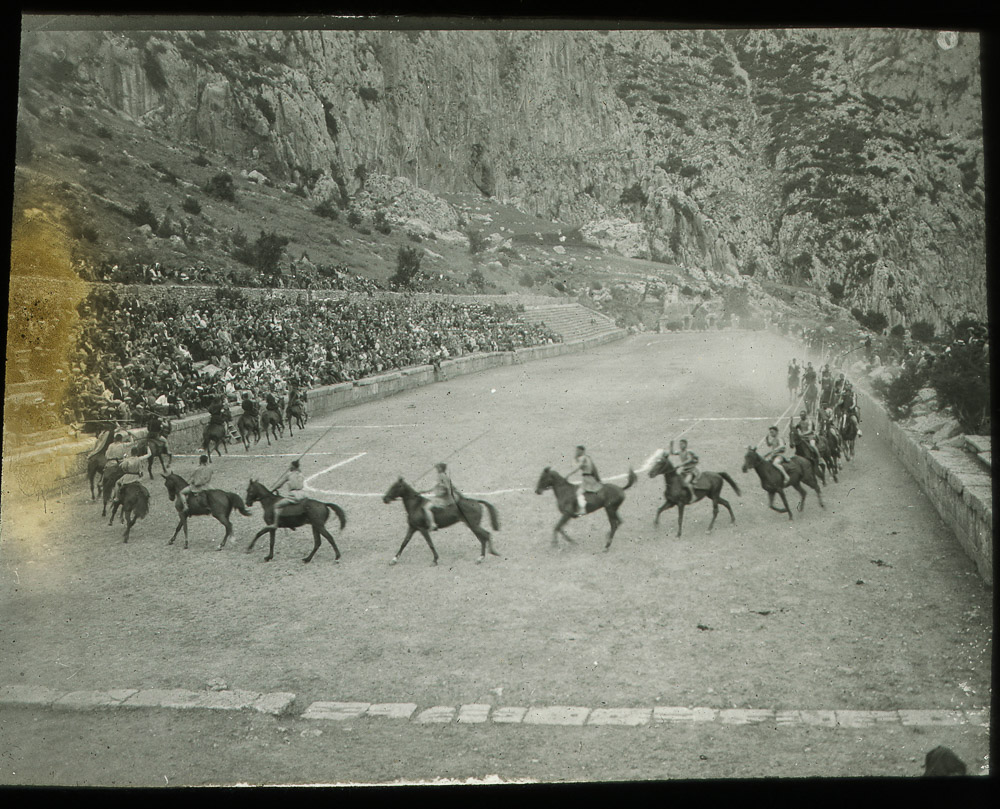
To commemorate the triumph of Apollo over Python the sanctuary organized the Pythian Games every four years which were athletic events much like the Olympics. Early in the 20th century Angelos Sikelianos organized a modern version of the Pythian games.
From the 7th and at least until the 4th c. BCE, the sanctuary of Delphi was part of the Amphictyonia alliance which protected the site from many invaders, and above all it prevented the Phocians who lived in the surrounding land from controlling it.
In 356 BCE the Phocians allied with the Athenians and the Spartans captured the sanctuary of Delphi, and in desperate need to finance their war they stripped the temples from the precious offerings. They held control of the grounds only for a short time until king Philip of Macedon liberated the sanctuary.
In 339 BCE Philip interfered once again against the Amphictyonic alliance when the Krissans trespassed on Apollo’s sacred grounds. Philip punished the Krissans, and consequently in 338 c. BCE defeated the combined armies of the Athenians and the Spartans, thus becoming the dominant force in Greek affairs.
The sanctuary of Delphi fell into Roman hands in 191 BCE, and was stripped of its treasures by General Sylla in 86 BCE in order to finance his siege of Athens, and three years later Delphi was razed by the Thracian Maedi who–legend has it–extinguished the sacred fire which had been burning uninterrupted for centuries.
Despite some building revivals by the Romans, the Oracle of Delphi lost its influence over the next few centuries and its spiritual fire was gradually extinguished as Apollo’s worship was replaced by a new religion imported from the East: Christianity.
Related Pages