
On this page:
Humans and Hominins | Οι Άνθρωποι και οι ανθρωπίδες
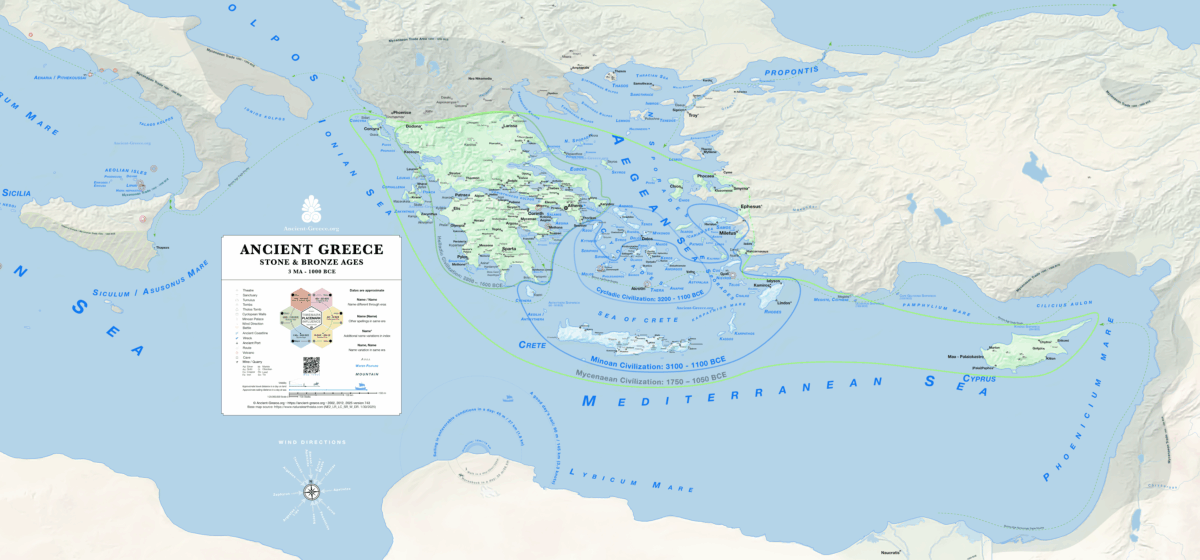
The earliest evidence of habitation in Greece comes in the form of a skull found in the Petralona Cave in Halikidiki. The cranium has been difficult to date, with some estimates indicating that it is about between 300,000 and 400,000 years old.
While questions abound regarding the exact age and the species of the cranium, it has been classified as a hybrid between “Homo Erectus, the first hominid to migrate out Africa, and Homo Neanderthalensis, the early human that dominated Europe and the Near East before the advent of our own species.” (Runnels & Murray, 15).
Preliminary dating of stone tools found in Megalopolis indicates they were used during the Lower Paleolithic period.
Apidima Cave scull fragment has been dated to 210 000 years ago, making it the earliest example of modern humans (early Homo sapiens) found outside Africa.
The earliest evidence of burials and commerce in the Aegean (dated to 7250 BCE) were unearthed in Franchthi cave in the Argolid, along with obsidian glass tools from Melos island, indicating seafaring activity as early as 13000 BCE.
A wealth of stone tools found in sites in Epirus, Thessaly, Macedonia, and the Peloponnesse reveal the existence of flourishing Paleolithic and Mesolithic communities in the Greek mainland, but the Neolithic settlements found are much more numerous.
◈ Οι παλαιότερες ενδείξεις κατοίκησης στην Ελλάδα προέρχονται από ένα κρανίο που βρέθηκε στο σπήλαιο των Πετραλώνων στη Χαλκιδική. Η χρονολόγηση του κρανίου υπήρξε δύσκολη, με ορισμένες εκτιμήσεις να υποδεικνύουν ότι είναι ηλικίας μεταξύ 300.000 και 400.000 ετών.
Παρόλο που υπάρχουν πολλά ερωτήματα σχετικά με την ακριβή ηλικία και το είδος του κρανίου, έχει ταξινομηθεί ως υβρίδιο μεταξύ του «Homo Erectus, του πρώτου ανθρωπίδη που μετανάστευσε έξω από την Αφρική, και του Homo Neanderthalensis, του πρώιμου ανθρώπου που κυριάρχησε στην Ευρώπη και την Εγγύς Ανατολή πριν από την έλευση του δικού μας είδους» (Runnels & Murray, 15). Προκαταρκτικές χρονολογήσεις λίθινων εργαλείων που βρέθηκαν στη Μεγαλόπολη δείχνουν ότι χρησιμοποιήθηκαν κατά την Κατώτερη Παλαιολιθική περίοδο.
Ένα θραύσμα κρανίου από το σπήλαιο Απήδημα έχει χρονολογηθεί πριν από 210.000 χρόνια, καθιστώντας το το παλαιότερο παράδειγμα σύγχρονων ανθρώπων (πρώιμος Homo sapiens) που έχει βρεθεί εκτός Αφρικής. Οι παλαιότερες ενδείξεις ταφών και εμπορίου στο Αιγαίο (χρονολογούμενες στο 7250 π.Χ.) ήρθαν στο φως στο σπήλαιο Φράγχθι στην Αργολίδα, μαζί με εργαλεία από οψιανό της Μήλου, γεγονός που υποδηλώνει ναυτική δραστηριότητα ήδη από το 13.000 π.Χ.
Ένας πλούτος λίθινων εργαλείων που βρέθηκαν σε τοποθεσίες στην Ήπειρο, τη Θεσσαλία, τη Μακεδονία και την Πελοπόννησο αποκαλύπτουν την ύπαρξη ακμαζουσών Παλαιολιθικών και Μεσολιθικών κοινοτήτων στην ηπειρωτική Ελλάδα, αν και οι νεολιθικοί οικισμοί που έχουν εντοπιστεί είναι πολύ περισσότεροι.
Neolithic Greece | Η Νεολιθική Ελλάδα
The Neolithic Era starts in the beginning of the 7th millennium and is characterized by development of farming, stock-breeding, extensive use of stone in construction, and craft specialization. It is divided in five phases:
- Pre-Ceramic or Aceramic (6800 – 6500 BCE)
- Early Neolithic (6500 – 5800 BCE)
- Middle Neolithic (5800 – 5300 BCE)
- Late Neolithic I (5300 – 4800 BCE)
- Late Neolithic II (4800 – 4500 BCE)
- Final Neolithic or Chalcolithic (4500 – 3200 BCE).
Neolithic settlements were spread throughout Greece, with a higher concentration around the Thessalian plain.
The Neolithic settlements of Sesklo (c. 7000 – 3200 BCE) and Dimini (c. 4800 – 4500 BCE) in Thessaly exhibit early evidence of sophisticated social organization, advanced economies, and unique styles of pottery.
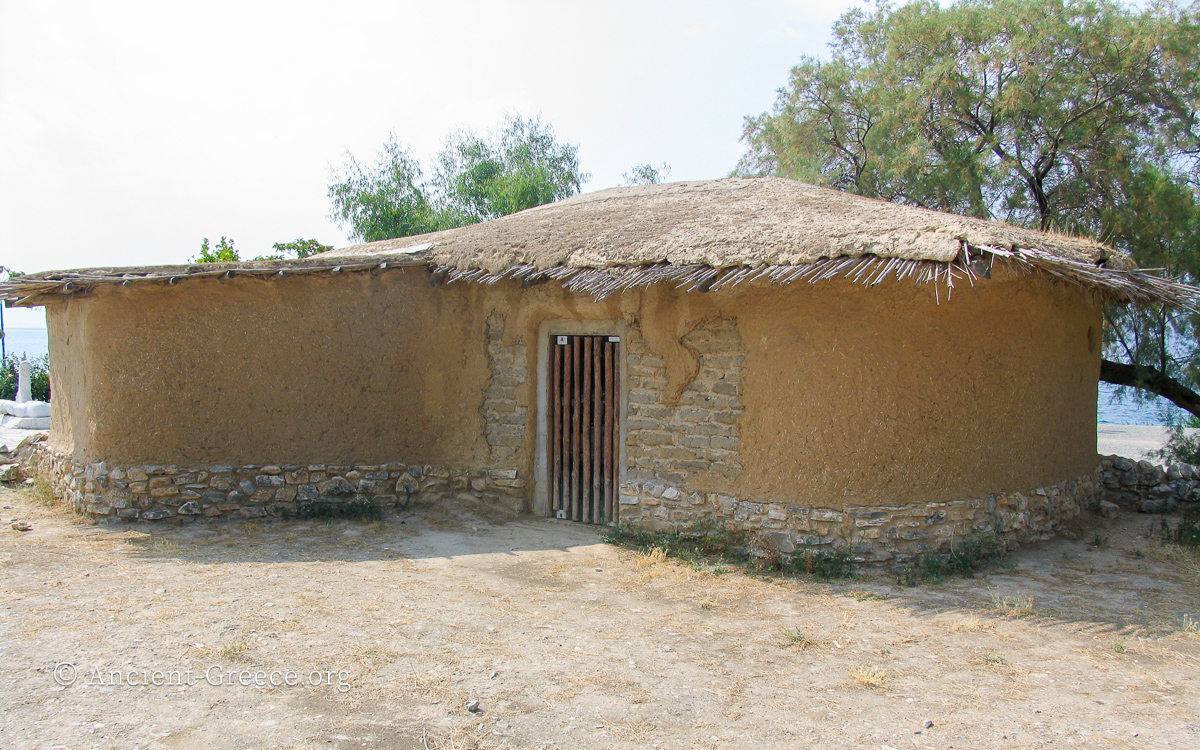
Their settlements included fortifications, streets, squares, and early versions of “megaron” and Tsangli type houses–making them the earliest architectural and town-planning forms in Europe.
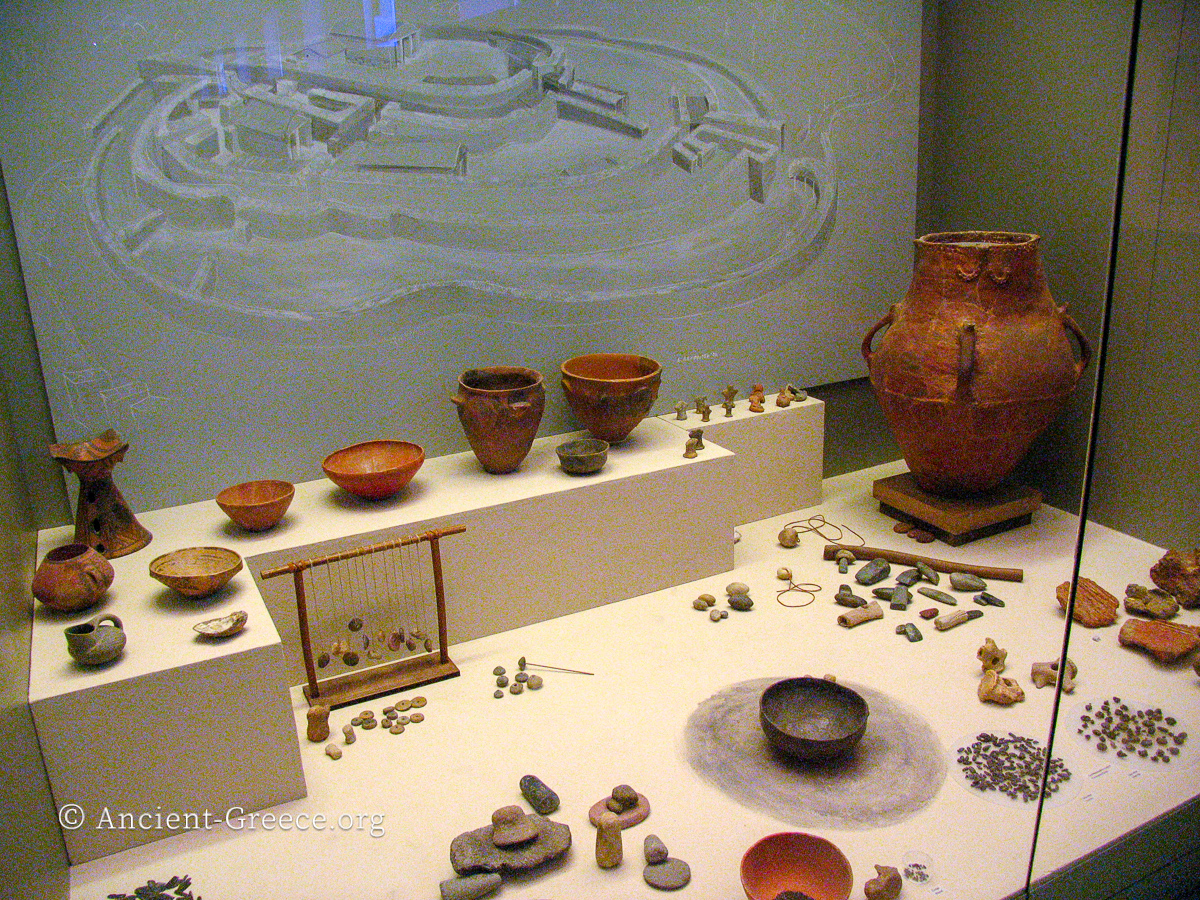
Excavations of Neolithic settlements have unearthed a plethora of personal articles (weaving and hand tools, vases, and domesticated animals), as well as communal properties (sheep-folds, corp barns, public areas, and fortifications).
The presence of obsidian objects in the mainland provide clear evidence of wide-spread seafaring in the Aegean Sea since the very beginning of the Neolithic Era.
The Final Neolithic (or Chalcolithic) phase marks the gradual transition to the metal-based economy of the Early Bronze Age.
◈ Η Νεολιθική Εποχή αρχίζει στις αρχές της 7ης χιλιετίας και χαρακτηρίζεται από την ανάπτυξη της γεωργίας, της κτηνοτροφίας, την εκτεταμένη χρήση του λίθου στις κατασκευές και την εξειδίκευση των τεχνών. Χωρίζεται σε πέντε φάσεις:
Προκεραμική ή Ακεραμική (6800 – 6500 π.Χ.) Αρχαιότερη Νεολιθική (6500 – 5800 π.Χ.) Μέση Νεολιθική (5800 – 5300 π.Χ.) Νεότερη Νεολιθική Ι (5300 – 4800 π.Χ.) Νεότερη Νεολιθική ΙΙ (4800 – 4500 π.Χ.) Τελική Νεολιθική ή Χαλκολιθική (4500 – 3200 π.Χ.)
Οι νεολιθικοί οικισμοί ήταν εξαπλωμένοι σε όλη την Ελλάδα, με υψηλότερη συγκέντρωση γύρω από τη θεσσαλική πεδιάδα.
Οι νεολιθικοί οικισμοί του Σέσκλου (περ. 7000 – 3200 π.Χ.) και του Διμηνίου (περ. 4800 – 4500 π.Χ.) στη Θεσσαλία παρουσιάζουν πρώιμες ενδείξεις εξελιγμένης κοινωνικής οργάνωσης, προηγμένης οικονομίας και μοναδικών ειδών κεραμικής.
Οι οικισμοί τους περιλάμβαναν οχυρώσεις, δρόμους, πλατείες και πρώιμες μορφές του τύπου «μεγάρου» και σπιτιών τύπου Τσαγγλί – αποτελώντας τις αρχαιότερες αρχιτεκτονικές και πολεοδομικές μορφές στην Ευρώπη.
Οι ανασκαφές σε νεολιθικούς οικισμούς έχουν φέρει στο φως πληθώρα προσωπικών αντικειμένων (εργαλεία υφαντικής και χειρός, αγγεία και εξημερωμένα ζώα), καθώς και κοινόχρηστες εγκαταστάσεις (μαντριά, αποθήκες σιτηρών, δημόσιους χώρους και οχυρώσεις).
Η παρουσία αντικειμένων από οψιανό στην ηπειρωτική χώρα παρέχει σαφείς αποδείξεις για την ευρεία εξάπλωση της ναυσιπλοΐας στο Αιγαίο Πέλαγος ήδη από τις αρχές της Νεολιθικής Εποχής.
Η φάση της Τελικής Νεολιθικής (ή Χαλκολιθικής) σηματοδοτεί τη σταδιακή μετάβαση προς την οικονομία που βασίζεται στο μέταλλο κατά την Πρώιμη Εποχή του Χαλκού.
Photographs – Φωτογραφίες
Chapters | Κεφάλαια
This history of Ancient Greece is divided into the following chapters: | Αυτή η ιστορία της Αρχαίας Ελλάδας είναι χωρισμένη στα ακόλουθα κεφάλαια:
- Timeline | Χρονολόγιο
- Introduction | Εισαγωγή
- Overview | Επισκόπηση
- Geography & Geology | Γεωγραφία & Γεολογία
- Stone Age | Λίθινη Εποχή
- Bronze Age | Εποχή του Χαλκού
6.2 Minoan | Μινωικός Πολιτισμός
6.3 Mycenaean | Μυκηναϊκός Πολιτισμός - Iron Age | Εποχή του Σιδήρου
7.1 Geometric or Dark Age | Γεωμετρική ή Σκοτεινή Εποχή
7.2 Archaic Era | Αρχαϊκή Εποχή - Classical Era | Κλασική Εποχή
- Hellenistic Era | Ελληνιστική Εποχή
Related Pages